
How AI Helps You Deliver Hyper-Personalised Content at Scale
There is a version of marketing that most small business owners aspire to and almost none achieve consistently.
It is the version where every person in your audience feels like you are speaking directly to them. Where the email they receive addresses exactly where they are right now. Where the content they find on your website answers the question they were already asking. Where the first interaction they have with your business feels less like a broadcast and more like a conversation.
This is hyper-personalisation - and for a long time, it was genuinely out of reach for small businesses. Delivering personalised experiences at scale required sophisticated technology, large data sets, dedicated marketing teams, and budgets that simply did not exist outside enterprise organisations.
AI has changed that equation. Not completely, and not without effort - but enough that small business owners who understand how to use it are delivering content experiences that would have been impossible to produce even two years ago.
What Hyper-Personalisation Actually Means
Personalisation in marketing exists on a spectrum.
At the basic end, you have what most businesses already do - using someone's first name in an email, segmenting your list into broad categories, sending different content to different audiences. This is table stakes now. It is expected, and its absence is noticed, but its presence no longer creates a competitive advantage.
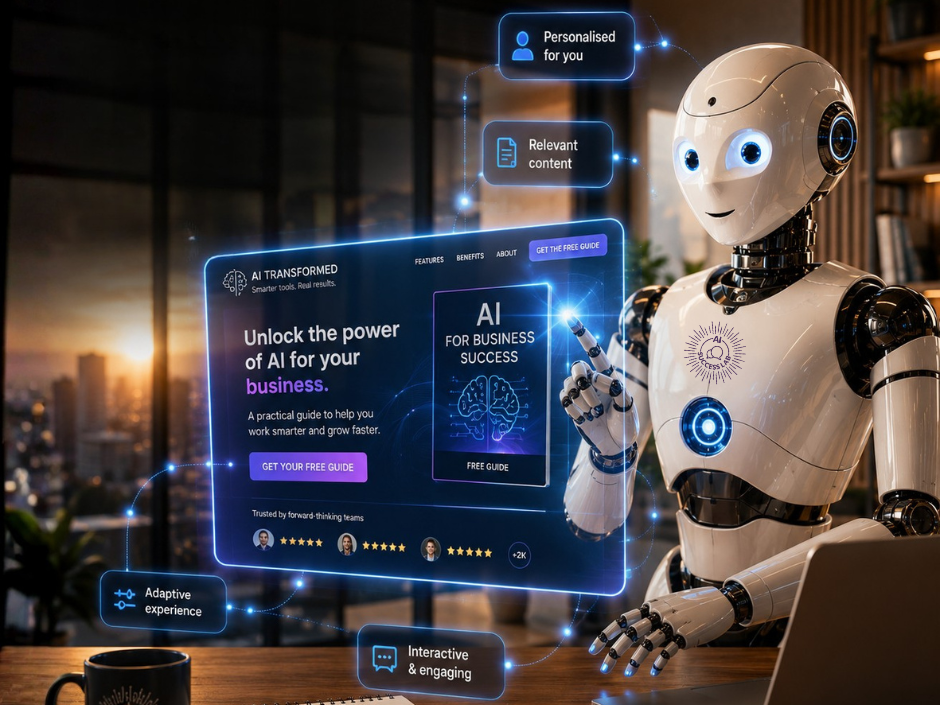
Hyper-personalisation goes further. It uses specific information about an individual - their behaviour, their stated preferences, their situation, their goals - to deliver content that responds to them as an individual rather than as a member of a category.
The difference in the experience is significant. "Hi Olivia, here are some marketing tips" is personalisation. "Olivia, based on the quiz you completed last week, here is the specific content repurposing strategy that fits your current workflow and audience size" is hyper-personalisation.
One feels like a mail merge. The other feels like a conversation.
Where AI Makes Hyper-Personalisation Possible for Small Business
There are three areas where AI is making meaningful personalisation accessible for small businesses right now.
1. Interactive tools that segment by input
This is the most immediate and accessible entry point. When someone completes a quiz, assessment, or calculator - like the interactive lead magnets covered in last week's post - they are telling you something specific about their situation.
That information is the foundation of personalisation. Someone who scores low on AI readiness needs different content from someone who scores high. Someone whose biggest challenge is content creation needs different recommendations from someone whose challenge is client delivery. The quiz does not just generate a lead - it generates a segmentation signal that makes every subsequent interaction more relevant.
AI can help you design the logic behind these tools, map the outcomes to specific audience segments, and create the personalised result content that each segment receives. The result is a system that does the segmentation work automatically - so the right content reaches the right person without manual sorting.
2. Email sequences that adapt to behaviour
Most email sequences are linear - everyone receives the same emails in the same order regardless of what they do or do not engage with. Hyper-personalised sequences branch based on behaviour.
Someone who clicks the link about social media content gets a follow-up email that goes deeper on social media. Someone who ignores three emails in a row gets a re-engagement sequence rather than the next instalment of the welcome series. Someone who visits the membership page twice without converting gets a specific email that addresses the most common hesitations at that decision point.
AI helps you design these branching sequences and write the content for each path - which means you are not writing twice as many emails to serve different segments. You are writing smarter emails that respond to what people actually do.
3. Content that speaks to specific audience segments
If you work with more than one type of client - which most small businesses do - the content that resonates with one segment often falls flat with another. A marketing consultant running a team of five has different concerns from a solo consultant just starting out. A not-for-profit leader has different pressures from a retail business owner.
AI can help you take a single core piece of content and adapt it for different audience segments - adjusting the examples, the language, the challenges referenced, and the recommended next steps to match each segment's specific context. This is content repurposing taken one level deeper, from format adaptation to audience adaptation.
The content repurposing system from May gave you the foundation for multiplying content across formats. Audience adaptation is the next layer - multiplying relevance across segments.
The Data You Already Have
One of the most common misconceptions about personalisation is that you need a sophisticated CRM or a large data set to do it well. Most small businesses already have more than enough to start.
Your existing audience data - the questions people ask in your community, the topics that get the most engagement on social media, the emails that generate the most replies, the objections that come up most often in sales conversations - is a rich source of personalisation intelligence.
AI can help you analyse this information and identify the patterns that should shape your content strategy. What are the two or three distinct situations your audience is typically in when they find you? What does each situation need to hear? What is the next right step for each one?
These questions do not require a data scientist to answer. They require careful thinking about your audience - and AI as a thinking partner to help you map it out systematically.
Building Toward a Personalised Content System
Hyper-personalisation is not a single tactic - it is a system built in layers over time. The businesses that do it well have not arrived there overnight. They have built it incrementally, starting with one segment, one interactive tool, or one branching email sequence, and expanded from there.
A practical starting point for most small businesses looks something like this:
Layer 1 - Know your segments. Identify the two or three distinct audience situations you serve. Give each one a clear description - who they are, where they are in their journey, what they need most right now.
Layer 2 - Build one interactive entry point. Create a quiz or assessment that identifies which segment a new audience member belongs to. This does not need to be complex - three to five questions that reliably distinguish between your key segments is enough.
Layer 3 - Create segment-specific follow-up. Design a simple email sequence or content path for each segment that starts from where they actually are. Even two or three emails tailored to each segment will outperform a generic sequence sent to everyone.
Layer 4 - Adapt your core content. As you create new content, take the extra step of adapting key pieces for each segment - adjusting the examples, the framing, and the recommended next steps to match each situation.
Each layer builds on the previous one. AI supports every step - from designing the segmentation logic to writing the adapted content to refining the sequences based on what is working.
Bringing the Month Together
Over the past four weeks, we have moved from the foundation of vibe coding through to interactive content, the new generation of lead magnets, and now personalisation at scale. These are not separate tactics - they are connected layers of the same system.
A vibe coded quiz captures a lead and segments them. The interactive experience builds trust and demonstrates expertise. The personalised follow-up sequence deepens the relationship. The adapted content keeps it relevant over time.
That is an AI-powered content system that works harder, connects more deeply, and converts more consistently than anything built on static content alone.
Ready to Build This Inside Your Business?
This is the work we do inside the AI Success Lab Elite Membership - not just learning about these concepts but building them, with live workshops, hands-on Prompt-a-Thons, and a community of business owners putting it into practice alongside you.
If June's theme has sparked ideas about what you could build for your audience, the membership is where you go from inspiration to implementation.
👉 Join the AI Success Lab Elite Membership
Frequently Asked Questions About AI Personalised Content Marketing
What is hyper-personalised content marketing?
Hyper-personalised content marketing uses specific information about an individual - their situation, behaviour, stated preferences, and goals - to deliver content that responds to them as an individual rather than as a member of a broad audience segment. AI makes this accessible for small businesses by automating the segmentation logic and content adaptation that previously required large teams and enterprise technology.
How can small businesses personalise their marketing with AI?
The most accessible starting points are interactive tools that segment by input (quizzes and assessments), email sequences that branch based on behaviour, and core content adapted for different audience segments. AI supports all three - helping design the logic, write the content, and refine based on what is working.
Do I need a lot of data to personalise my marketing?
No. Most small businesses already have enough information to start - in the questions their audience asks, the content that gets the most engagement, and the objections that come up most often. AI can help you analyse these patterns and identify the segmentation signals that should shape your content strategy.
What is the difference between personalisation and hyper-personalisation?
Basic personalisation uses broad categories - name, location, general audience segment. Hyper-personalisation goes deeper, using specific information about an individual's situation, behaviour, and goals to deliver content that feels individually relevant. The difference in experience is significant - one feels like a mail merge, the other feels like a conversation.
Where should I start with personalised content if I am a small business?
Start by identifying your two or three distinct audience segments - the different situations people are typically in when they find you. Build one simple interactive tool that identifies which segment a new audience member belongs to. Then create a short, segment-specific email sequence for each one. That three-layer foundation will outperform a generic content approach almost immediately.